

From Market Imbalances to Greater Accountability
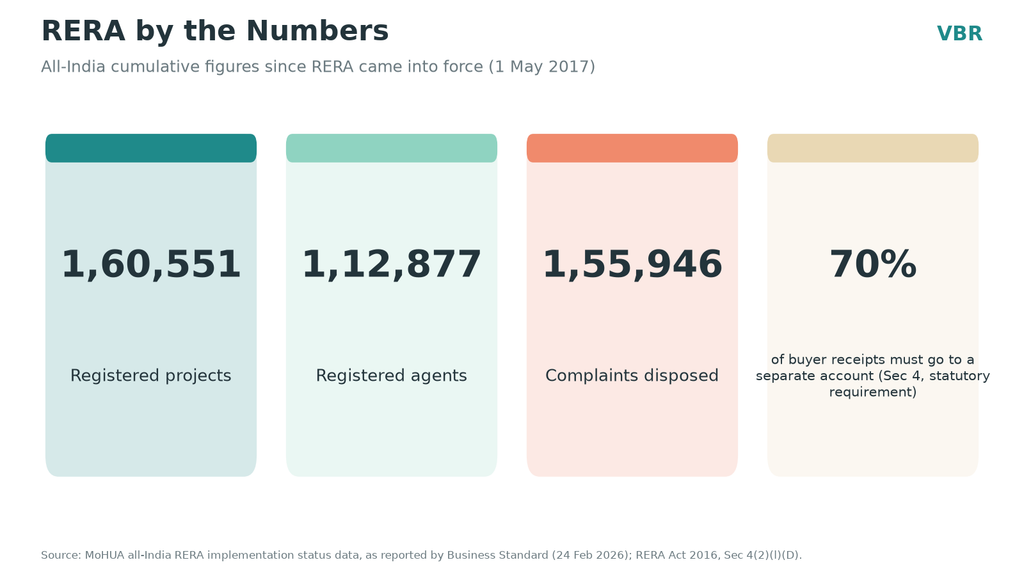
Real estate is one of India’s major economic sectors, contributing to urban development, employment and investment. Yet, for years, the sector faced delayed possession, limited transparency and an imbalance of information between developers and homebuyers. Buyers often committed substantial savings without clear visibility into project approvals, construction progress or completion timelines. Concerns over fund diversion, misleading advertisements and prolonged disputes further weakened market confidence. Although legal remedies existed, navigating them could be time-consuming, while regulatory approaches varied across states. These challenges highlighted the need for a framework that could strengthen accountability and improve the credibility of property transactions.
The Real Estate (Regulation and Development) Act, 2016, commonly known as RERA, marked an important step towards that objective, with its major provisions coming into force on 1 May 2017. Beyond buyer protection, the Act sought to address a broader business problem: markets function less efficiently when information is unreliable, contractual commitments lack credibility and risks are difficult to assess. By formalising disclosure requirements and establishing enforceable responsibilities, RERA aimed to create a more predictable environment for buyers, developers and investors.
The Regulatory Framework and Its Key Provisions
RERA establishes legal obligations for promoters and real estate agents, with project registration and disclosure at its core. Under Section 3, eligible projects must be registered with the relevant state or union territory authority before being advertised, marketed, booked or sold. Projects with a land area not exceeding 500 square metres or no more than eight apartments, inclusive of all phases, are generally exempt from registration under the central Act, although the appropriate government may prescribe lower thresholds. Section 4 requires promoters to submit project details and supporting documents, while Section 11 requires registered project information to be publicly available and updated as prescribed.
Financial accountability is addressed through Section 4, which requires promoters to deposit 70% of amounts realised from allottees into a separate account for land and construction costs. Withdrawals are subject to prescribed requirements linked to the project’s percentage of completion and certification by an engineer, architect and chartered accountant. Section 12 provides remedies for losses caused by false or incorrect statements in advertisements or prospectuses. Under Section 13, promoters cannot accept more than 10% of a property’s cost as an advance or application fee without first entering into and registering a written agreement for sale.
Section 14 requires adherence to sanctioned plans and establishes a five-year defect-liability mechanism. Covered defects brought to the promoter’s notice within five years of possession must be rectified without charge within 30 days, failing which the allottee may be entitled to compensation. Section 18 provides remedies for delayed possession, including a refund with prescribed interest where an allottee withdraws, or interest for each month of delay where the allottee remains in the project, subject to statutory conditions. Section 31 provides a mechanism for complaints to the regulatory authority or adjudicating officer, as applicable, while eligible appeals can be heard by the Real Estate Appellate Tribunal. Sections 9 and 10 establish registration and conduct requirements for agents dealing with covered projects.
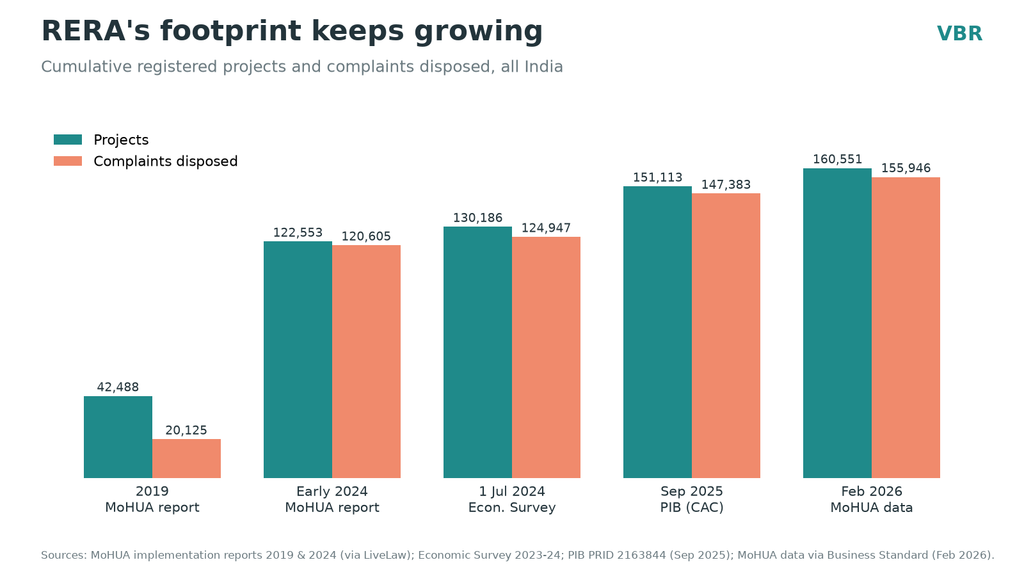
Together, these provisions make transparency, financial discipline and contractual accountability legal obligations rather than voluntary business practices. They also provide a framework through which buyers can assess projects and developers can establish credibility through compliance.
Business Impact: Trust, Competition and Implementation
For homebuyers, RERA improves access to project information and provides legal avenues when developers fail to meet their obligations. However, the number of complaints disposed of is not a reliable measure of success on its own. Administrative closure does not necessarily mean that a buyer received the desired remedy or that the dispute was resolved quickly. Assessing effectiveness requires examining decision timelines, implementation of orders and actual outcomes for homebuyers.
For developers, RERA creates both compliance responsibilities and an opportunity to differentiate themselves. Credible delivery schedules, transparent disclosures and disciplined use of funds can strengthen reputations, support sales and build lasting customer relationships. In a market where trust influences purchasing decisions and investor confidence, accountability can become a competitive advantage rather than merely a regulatory burden. Conversely, inconsistent enforcement can create uncertainty and disadvantage responsible developers competing against those who fail to comply.
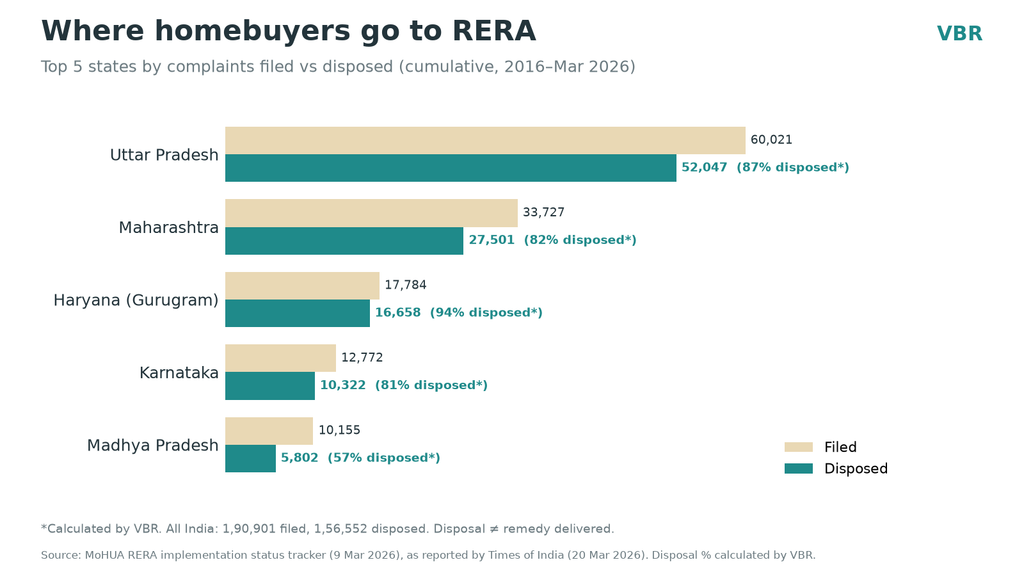
Brokers also contribute to market credibility. Registration, accurate information and ethical selling practices can improve transaction quality and professional standards. Yet the broader benefits depend on consistent implementation. When dispute resolution is slow or orders are not effectively enforced, statutory protections may offer less practical value than intended.
Ultimately, RERA’s business value depends on whether its legal provisions translate into predictable outcomes. Its success must be measured not simply by projects registered or complaints disposed of, but by whether orders are implemented, disputes are resolved effectively and contractual commitments are honoured. RERA has established a foundation for a more reliable property market; sustained enforcement will determine how fully its economic benefits are realised.
Admiring the time and effort you put into your site and in depth information you provide. It’s great to come across your website every once in a while that isn’t the same old rehashed material. Excellent read! I’ve bookmarked your site and I’m adding your RSS feeds to my Google account.