
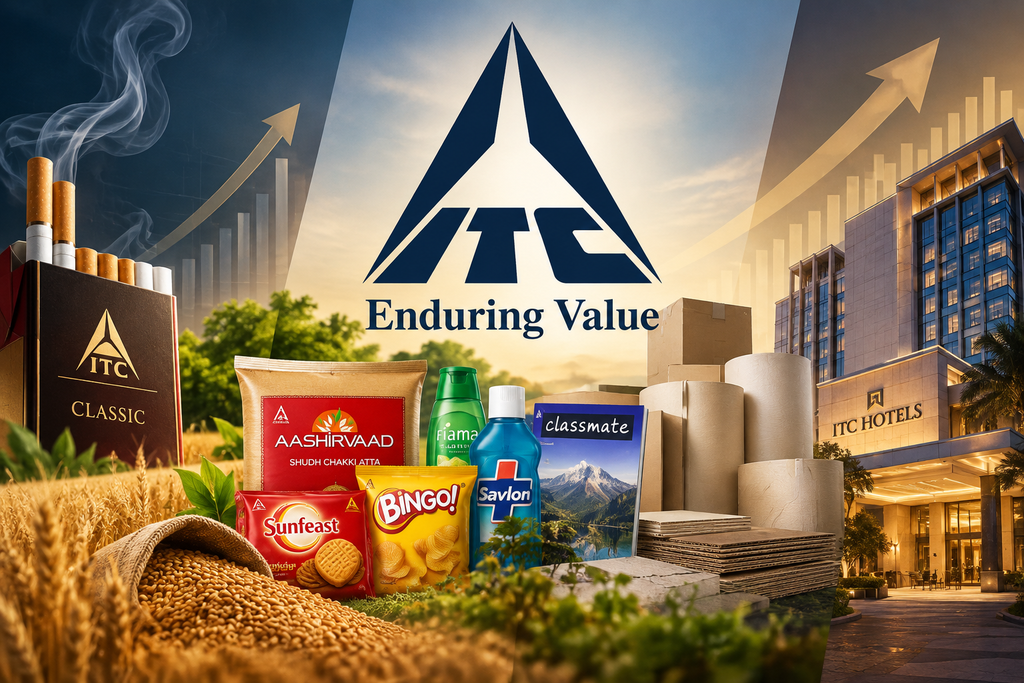
From Tobacco to a Diversified Conglomerate
For more than a century, ITC Limited has been closely associated with cigarettes. Founded in 1910 as the Imperial Tobacco Company of India, the company spent decades building its strength around tobacco before beginning a more ambitious diversification journey. The major shift accelerated during the 1990s and early 2000s, when ITC began using the cash flows, distribution network and agricultural linkages of its cigarette business to build businesses beyond tobacco. It expanded across FMCG, agri-business, paperboards, packaging, hotels and information technology. Its FMCG push produced brands such as Aashirvaad, Sunfeast, Bingo!, YiPPee!, Classmate, Savlon and Fiama.
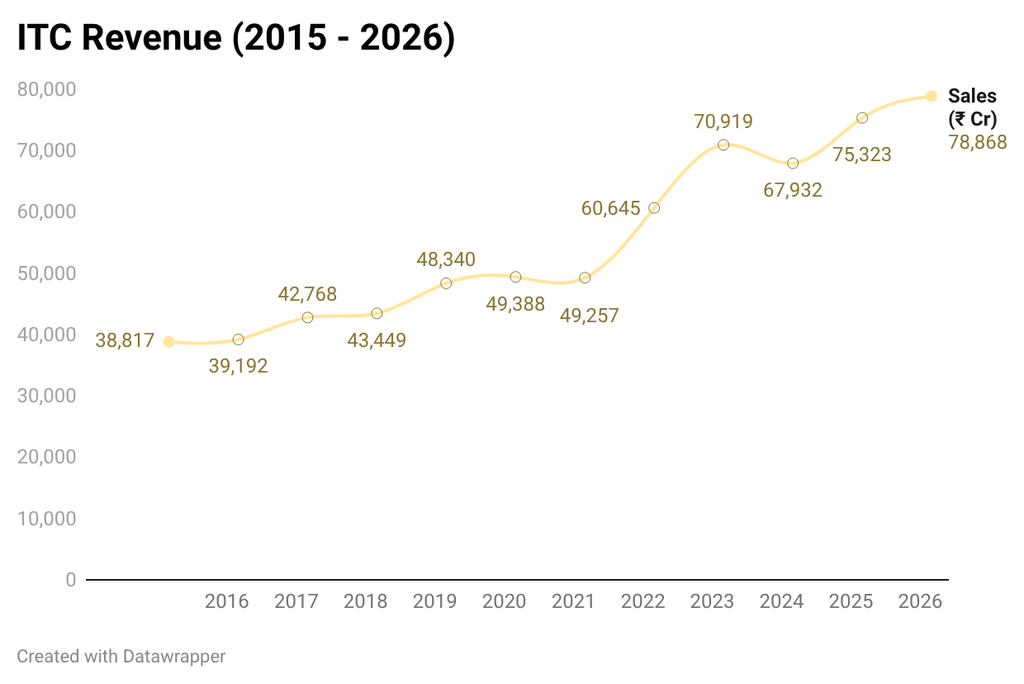
The strategy was not simply to enter unrelated categories; ITC attempted to connect its existing capabilities with new businesses, using agricultural sourcing for foods, manufacturing and packaging capabilities for consumer products, and its extensive distribution network to reach consumers. This helped non-cigarette businesses become a significant part of the company’s revenue base. The transformation, however, has not eliminated the importance of cigarettes. The legacy business continues to contribute a substantially larger share of segment profit than ITC’s newer consumer businesses, making it an important financial foundation for the wider portfolio.
The FMCG Test: Scale Is Not the Same as Brand Power
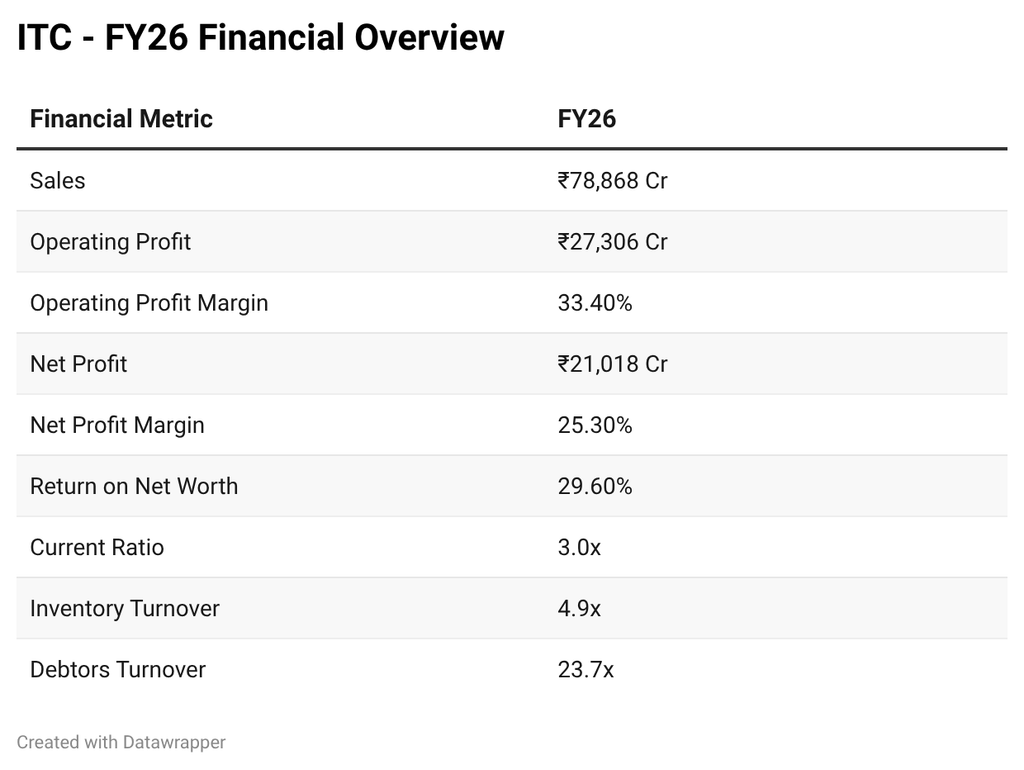
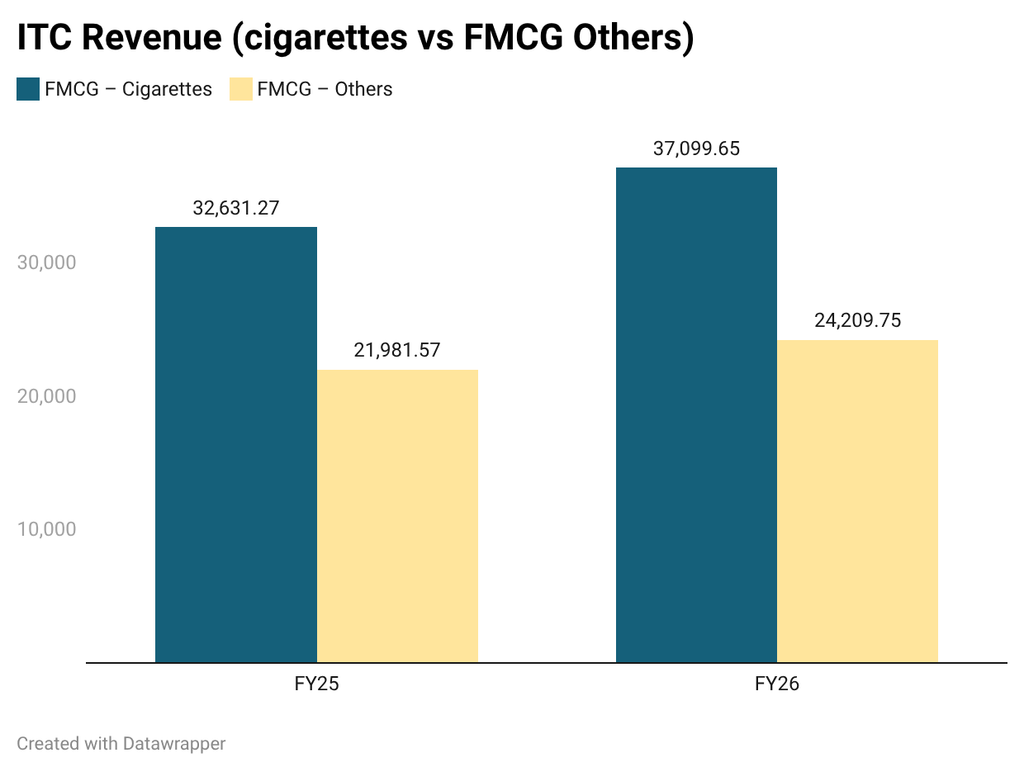
Today, ITC is at an interesting point in its transformation. On a continuing-operations basis, the company reported gross revenue of ₹80,867 crore in FY26. Cigarettes reported segment revenue of ₹61,309 crore and segment result of ₹21,051 crore, while FMCG-Others reported segment revenue of ₹24,210 crore and segment result of ₹2,413 crore. These figures highlight ITC’s central paradox: its FMCG business has become sizable and is growing, but cigarettes remain the much stronger profit contributor. The bigger challenge is therefore brand execution.
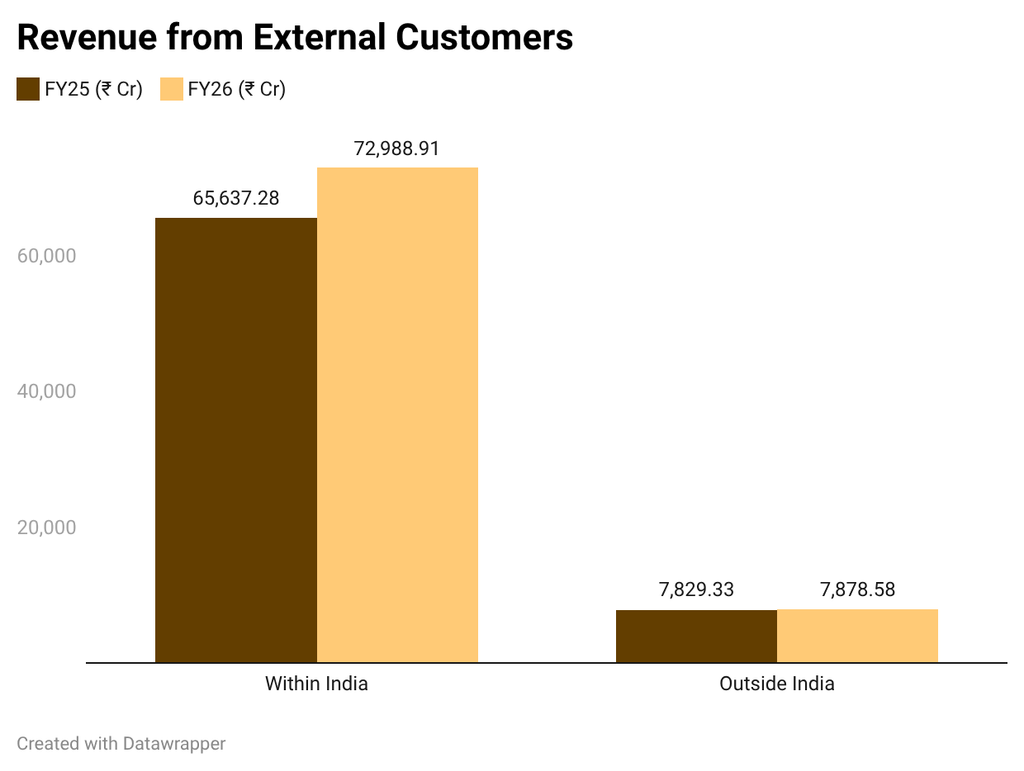
ITC has a large portfolio, but it operates in categories where competitors have spent decades building consumer loyalty. Sunfeast faces established biscuit players, YiPPee! competes in a noodles market led by entrenched brands, while its personal-care and packaged-food businesses face specialists such as Hindustan Unilever, Nestlé India, Britannia and numerous regional players. Managing such a wide portfolio can also make it harder to concentrate investment and management attention behind individual brands. ITC has responded through premiumisation, product launches, digital-first brands and acquisitions, while expanding modern trade, e-commerce and quick-commerce channels. Yet the question is whether these initiatives can create category-leading brands rather than simply add more products to an already crowded portfolio. The cigarette business gives ITC the financial capacity to invest for the long term, but FMCG ultimately has to prove that it can generate stronger returns as it scales.
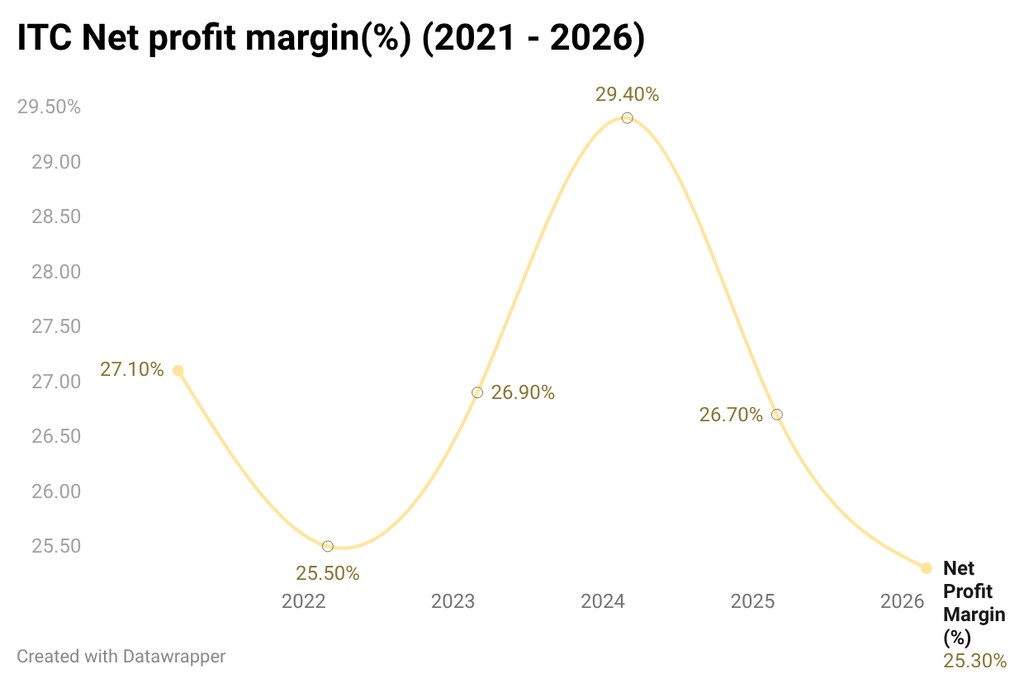
Hotels, Restructuring and the Large-Cap Challenge
ITC’s recent restructuring shows that the company is not only diversifying anymore; it is also simplifying. The Hotels business was demerged with effect from January 1, 2025, with ITC retaining approximately 40% of ITC Hotels while the remaining stake was distributed to existing shareholders. The separation allows the hospitality business to pursue its own capital allocation and growth strategy while making ITC more focused on cigarettes, FMCG, agri, paperboards, packaging and IT.
ITC Hotels retains a distinctive position through its luxury portfolio and “Responsible Luxury” philosophy, with sustainability, Indian heritage and food forming important parts of its identity. Importantly, ITC’s FMCG business has not been spun off. It remains within ITC, alongside cigarettes and its other businesses. This structure is central to what makes ITC different from large-cap FMCG peers such as Hindustan Unilever, Nestlé India or Britannia.
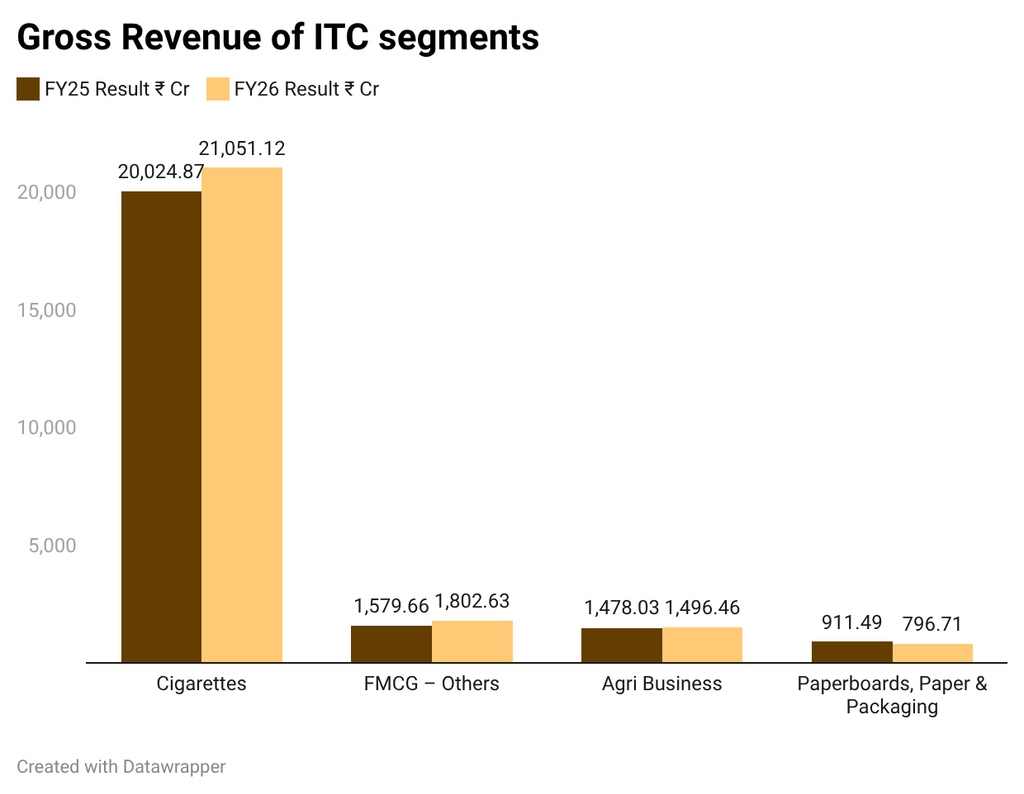
ITC is not a pure-play consumer company; it combines a powerful cash-generating cigarette business with consumer brands, agricultural sourcing, manufacturing, packaging and technology capabilities. That creates advantages that focused FMCG companies cannot easily replicate, but it also brings complexity and a potential conglomerate discount. Investors may value a diversified company less highly than a focused business when its different segments are harder to assess individually or when capital allocation across them is less transparent.
For a company of ITC’s large-cap scale, simply adding new brands is no longer enough. Three decades ago, diversification was about reducing dependence on tobacco. Today, the challenge is more demanding: Can ITC turn that diversification into a portfolio of businesses capable of generating strong returns and driving its next phase of growth?

Be the first to comment