
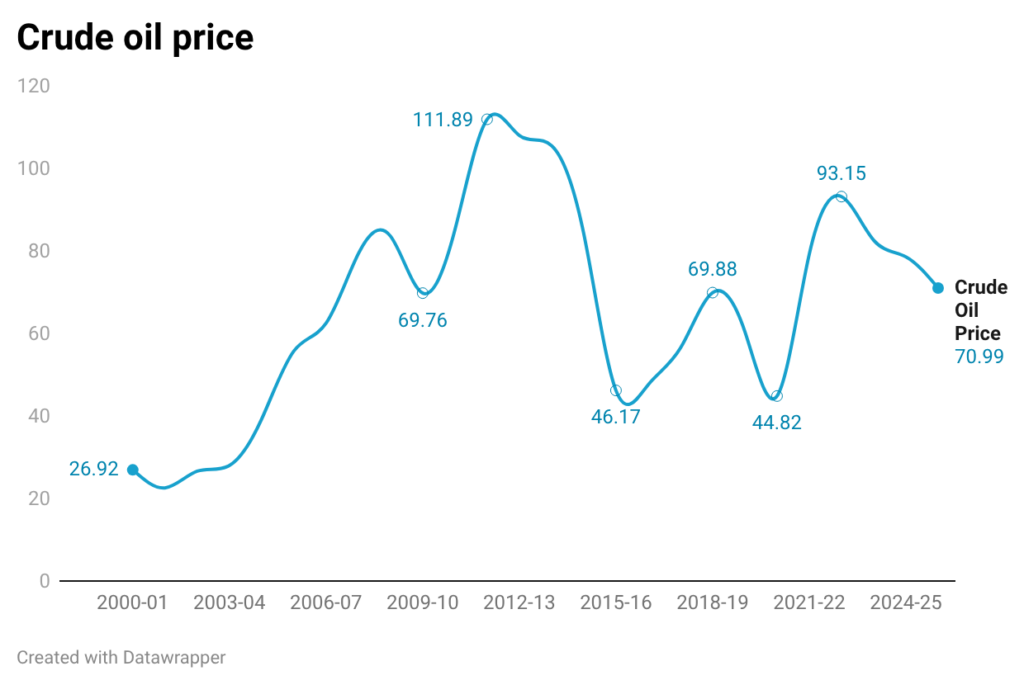
Crude oil prices have remained highly volatile over the past two decades, influenced by geopolitical conflicts, supply disruptions, and global demand cycles. Prices peaked above $110/barrel in 2012–13, before correcting sharply during oversupply phases and economic slowdowns. Recent years saw renewed volatility due to the Russia–Ukraine conflict and Middle East tensions. Since India imports the majority of its crude requirements, higher oil prices directly affect inflation, fuel costs, and trade deficits. Sustained elevated crude prices also strengthen the economic case for EV adoption and alternative fuels.
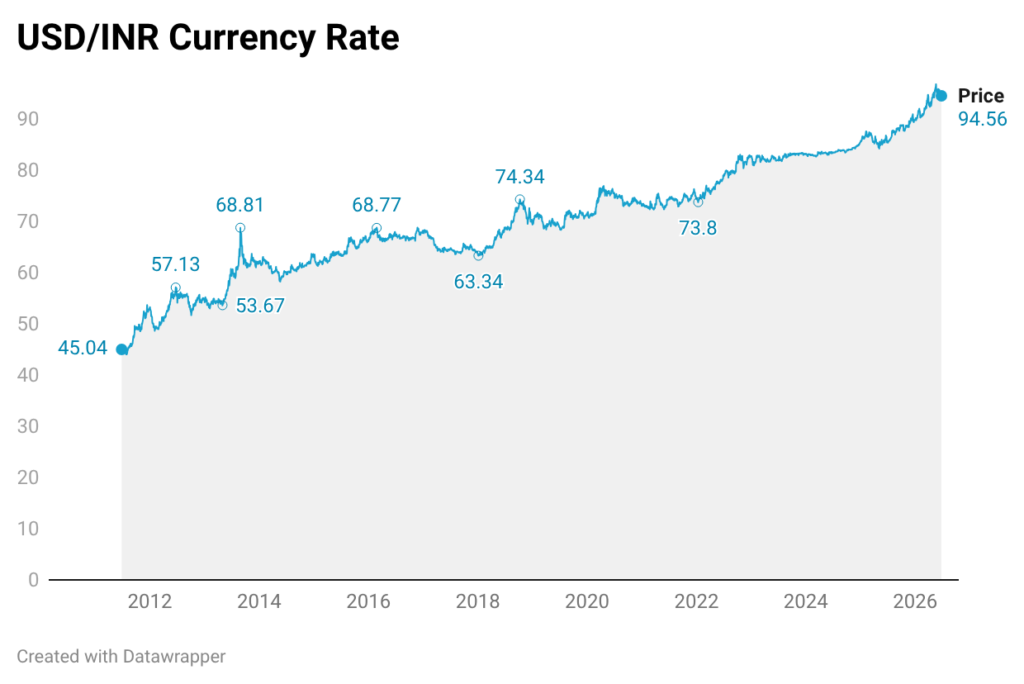
The USD/INR exchange rate has shown a steady long-term depreciation of the Indian rupee, moving from around ₹45/USD in 2011 to nearly ₹95/USD in 2026. This trend reflects inflation differentials, rising import dependency, and global capital flow dynamics. A weaker rupee increases the cost of imports such as crude oil, LNG, electronics, and semiconductors, creating inflationary pressure across the economy. Currency stability remains crucial for India’s macroeconomic resilience. Exchange-rate movements also significantly impact corporate margins, trade competitiveness, and foreign investment sentiment.
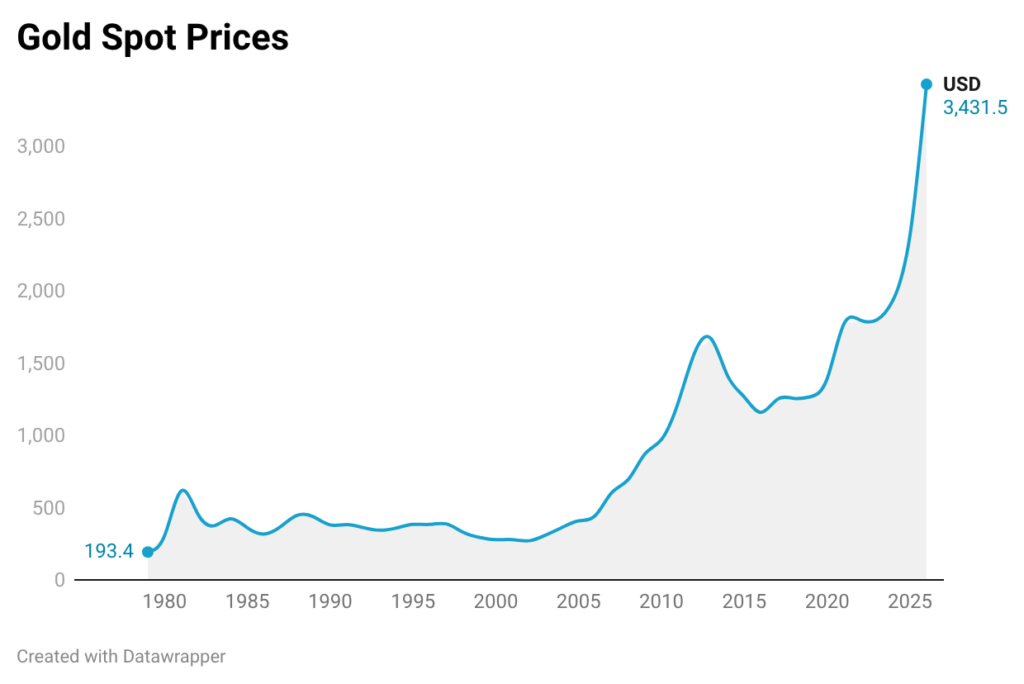
Gold prices have delivered a strong long-term uptrend, rising from below $200/oz in the late 1970s to above $3,400/oz in 2025–26. The rally has been driven by inflation concerns, central bank buying, geopolitical uncertainty, and safe-haven demand. Gold typically performs well during periods of economic stress, currency weakness, and market volatility. Recent record highs indicate growing investor preference for defensive assets amid global uncertainty. The metal continues to serve as a key hedge against inflation and financial instability.
Gold prices have delivered a strong long-term uptrend, rising from below $200/oz in the late 1970s to above $3,400/oz in 2025–26. The rally has been driven by inflation concerns, central bank buying, geopolitical uncertainty, and safe-haven demand. Gold typically performs well during periods of economic stress, currency weakness, and market volatility. Recent record highs indicate growing investor preference for defensive assets amid global uncertainty. The metal continues to serve as a key hedge against inflation and financial instability.
Be the first to comment