
The global diamond industry is undergoing a structural shift as natural diamonds and laboratory-grown diamonds (LGDs) increasingly serve different consumer propositions. Natural diamonds continue to anchor the premium jewellery market, while LGDs offer a more affordable alternative. India sits at the centre of this transition: it is the world’s leading hub for cutting and polishing diamonds and has also emerged as one of the largest markets for natural diamond jewellery. The opportunity is better understood through India’s position across manufacturing, exports and domestic jewellery consumption than through a single market-size number.
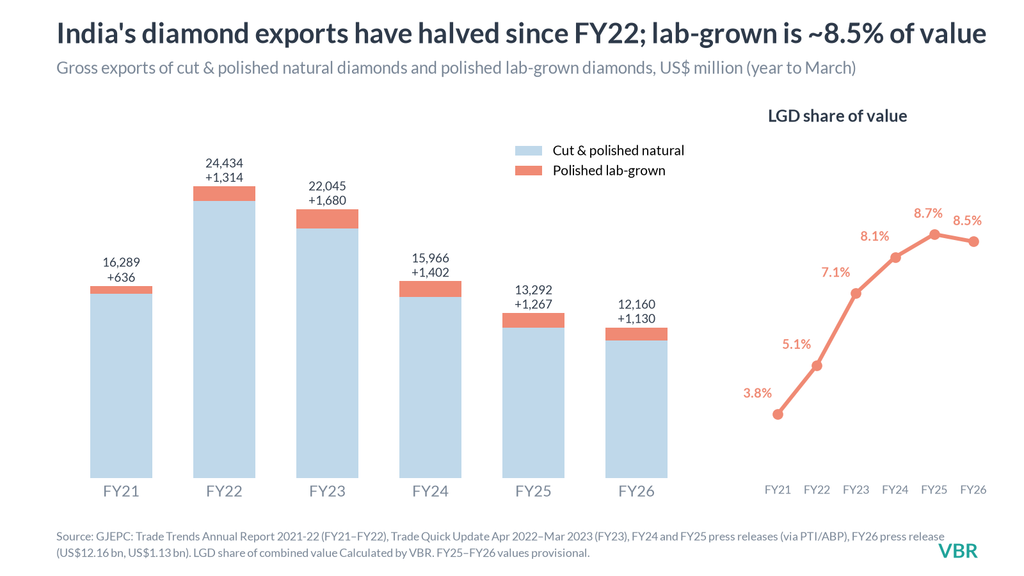
The market, however, remains uneven. In its interim results for 2026, De Beers described rough-diamond trading conditions as challenging, with smaller, lower-value natural diamonds facing continued price pressure from lab-grown alternatives. At the same time, it said demand in India remained robust in the first half of 2026, although higher gold duties and a weaker rupee pose short-term risks. These contrasting trends show why the diamond industry can no longer be viewed as a single, uniform market.
For certification companies, this complexity matters. As natural diamonds, LGDs, coloured gemstones and certified jewellery coexist, buyers and businesses need reliable information about what they are purchasing. Certification provides it by establishing a recognised assessment of a stone’s identity and characteristics, narrowing the information gap between manufacturers, retailers and consumers.
Be the first to comment