
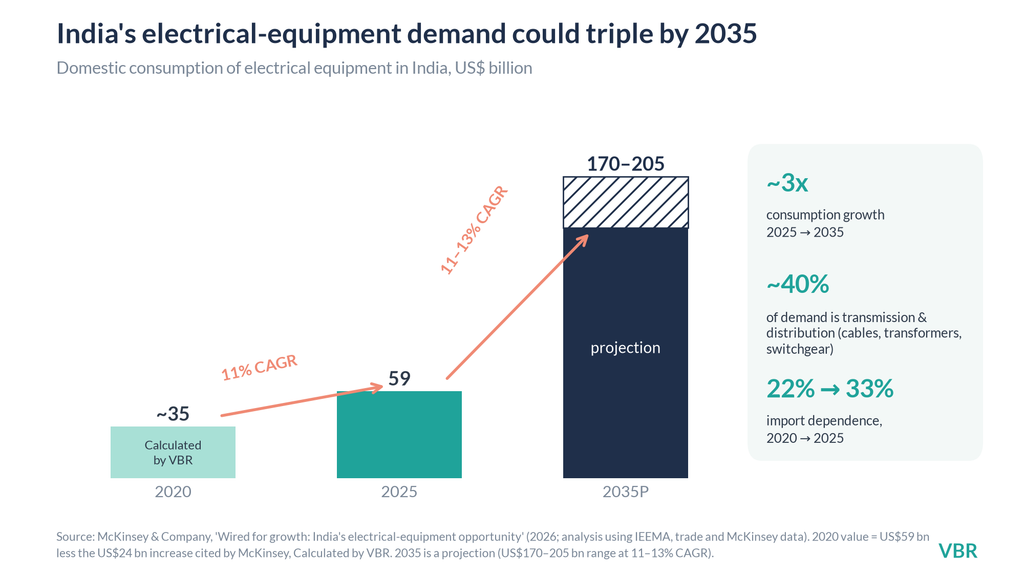
India’s electrical-equipment industry is expanding along with electricity demand, renewable-energy integration and industrial modernisation. Domestic consumption reached about US$59 billion in 2025, growing at an 11% CAGR from 2020, and could exceed US$170 billion by 2035, according to McKinsey & Company. Grid expansion and renewable integration support demand for transformers and substations, while industrial modernisation and the push for energy efficiency create opportunities in motors, drives and automation. The pipeline is visible: the National Electricity Plan aims to raise India’s transformation capacity from 1,398 GVA to 2,345 GVA by 2032, at an outlay of ₹9.16 lakh crore. Industry growth, however, does not guarantee profitable orders; pricing, qualifications and execution still matter.
Bharat Bijlee operates in two segments: Power Systems and Industrial Systems. Power Systems covers power transformers and substation projects, which link it to transmission and grid investment. Industrial Systems includes electric motors, magnet technology machines, drives and automation. This gives the company exposure to two domestic demand drivers, although capturing the opportunity will depend on its engineering capabilities, product quality, customer approvals and execution.
Stellar sales growth may moderate, but profits could keep climbing
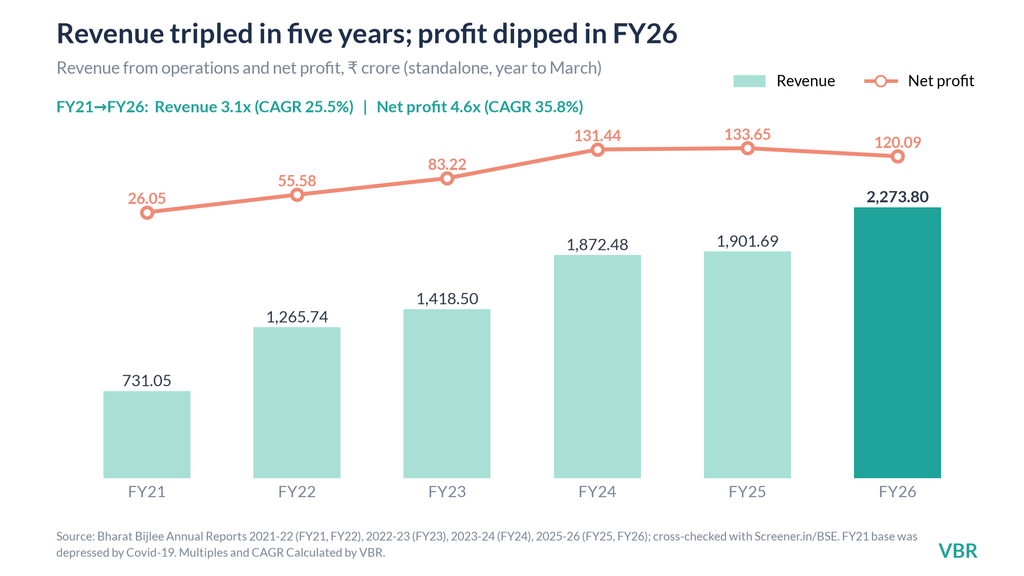
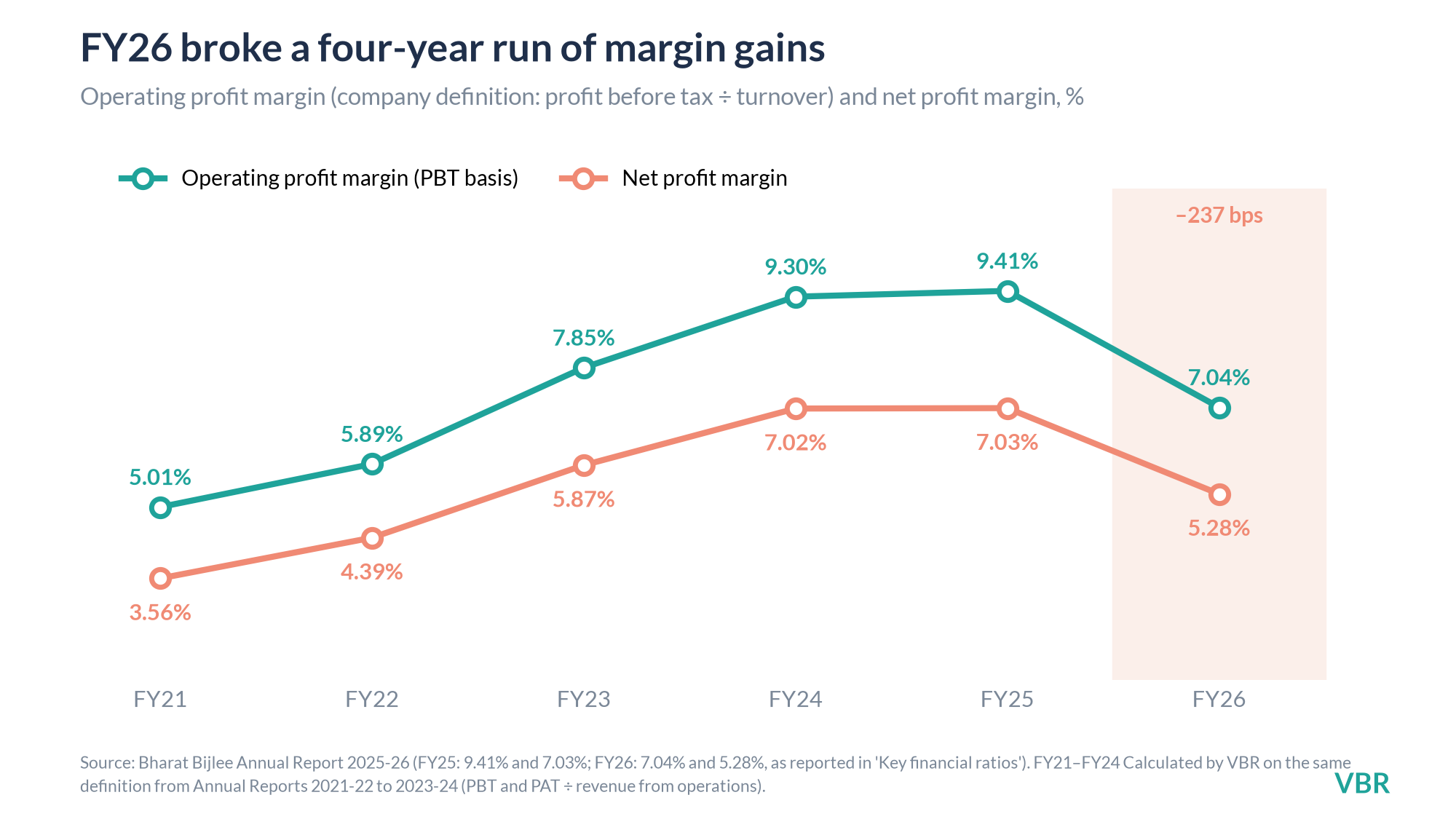
Revenue from operations more than tripled, from ₹731.05 crore in FY21 to ₹2,273.80 crore in FY26, and net profit rose from ₹26.05 crore to ₹120.09 crore. Yet FY26 exposed a gap between growth and profitability: revenue rose 19.6%, while net profit fell from ₹133.65 crore in FY25. The operating profit margin, which the company measures as pre-tax profit to turnover, fell from 9.41% in FY25 to 7.04% in FY26, and the net margin declined from 7.03% to 5.28%.
Be the first to comment