
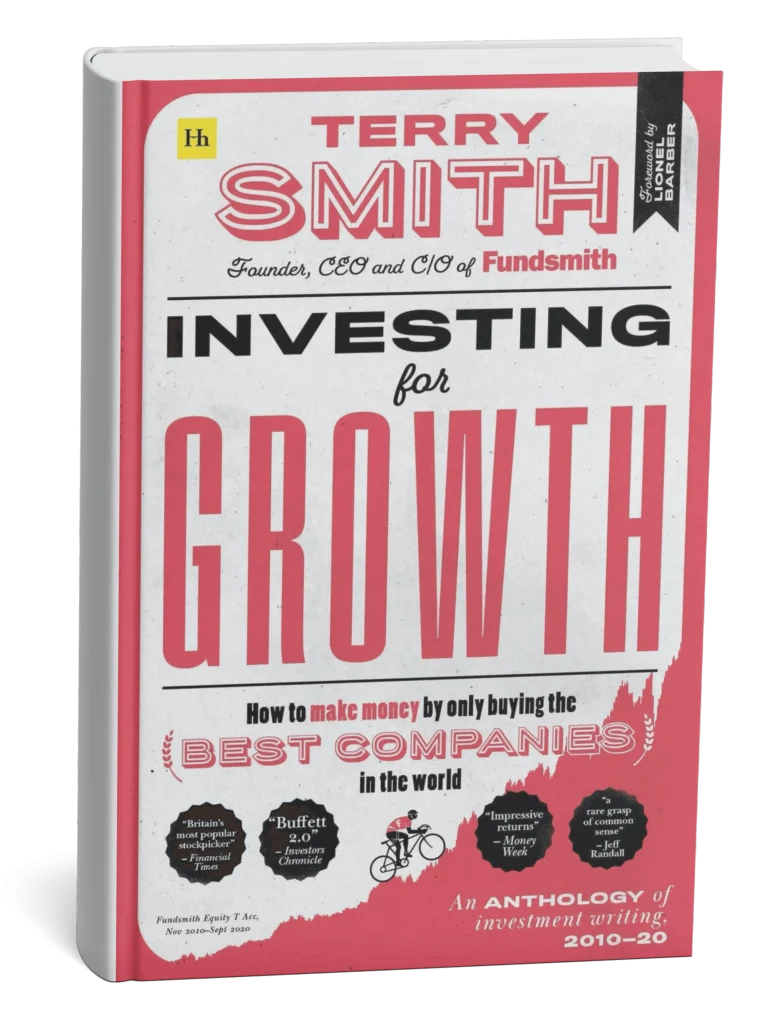
Terry Smith, author and founder of Fundsmith, challenges investors to look beyond share-price movements and focus on the quality of the businesses they own. This anthology of investment writing from 2010 to 2020 presents three central principles: buy good companies, do not overpay, and do nothing. The first principle emphasises identifying businesses that can create value consistently and sustain their competitive advantages over time. Such companies typically generate strong cash flows, earn attractive returns on capital and possess advantages such as customer loyalty, pricing power or economies of scale.
Smith distinguishes genuine business quality from revenue growth alone, as expanding sales do not automatically translate into shareholder value. Lasting economic value emerges when a company uses capital efficiently and reinvests earnings at attractive returns. The second principle, do not overpay, highlights the relationship between business quality and investment returns. Even an excellent company can become a poor investment if its share price already reflects unrealistic growth expectations.
Investors must therefore evaluate earning potential, cash generation and valuation rather than assume that quality justifies any price. The third principle, do nothing, challenges unnecessary trading and encourages investors to give strong businesses time to compound their value. However, patience does not mean ignoring deteriorating fundamentals; the investment thesis must remain valid for long-term ownership to make sense.
The book’s strength lies in connecting these principles into a disciplined investment philosophy: identify enduring business quality, pay a sensible price and avoid unnecessary interference while the business continues to perform. Its broader discussions encourage readers to question management decisions, investment costs and the use of shareholder capital. Yet the approach has limitations. Competitive advantages can weaken, technological changes can disrupt established businesses, and poor capital allocation can undermine a promising company.
Valuation also involves uncertainty because future cash flows and growth cannot be predicted precisely. A business may remain fundamentally strong while its shares deliver disappointing returns if investors initially pay too much. The anthology format can also feel repetitive, as essays revisit similar principles without always presenting a single, systematic framework for applying them to investment decisions.
Despite these limitations, Investing for Growth offers a valuable perspective by shifting attention from market predictions towards business economics. Its central lesson is that growth matters when it translates into sustainable economic value supported by enduring competitive advantages. Ultimately, successful investing requires identifying businesses capable of creating value consistently, paying a price that allows investors to benefit from that value creation, and having the discipline to hold them without becoming complacent. Quality is essential, but the price paid determines how much of that quality translates into investment returns.
Be the first to comment