
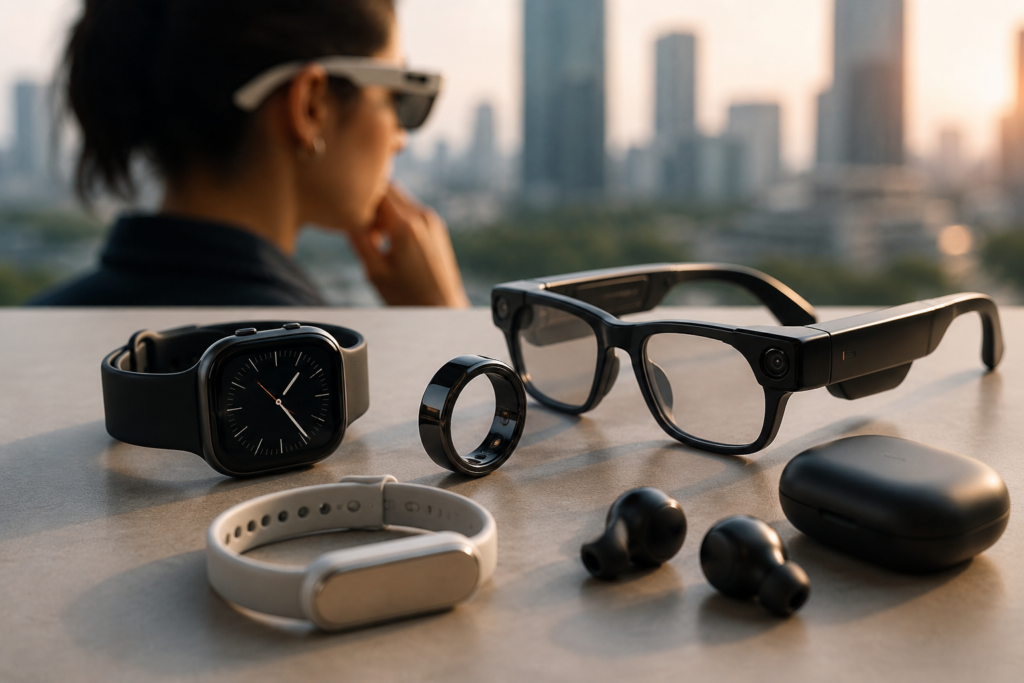
For nearly two decades, the smartphone has been the undisputed centre of the digital economy. It transformed how people communicate, work, shop and consume information. But every technological era eventually reaches an inflection point—and the next one is already taking shape, not in our hands, but on our bodies. From rings that silently track health to glasses capable of understanding the world around us, wearable devices are evolving from niche gadgets into intelligent AI companions. The race is no longer about building a better smartphone; it is about building what comes after it.
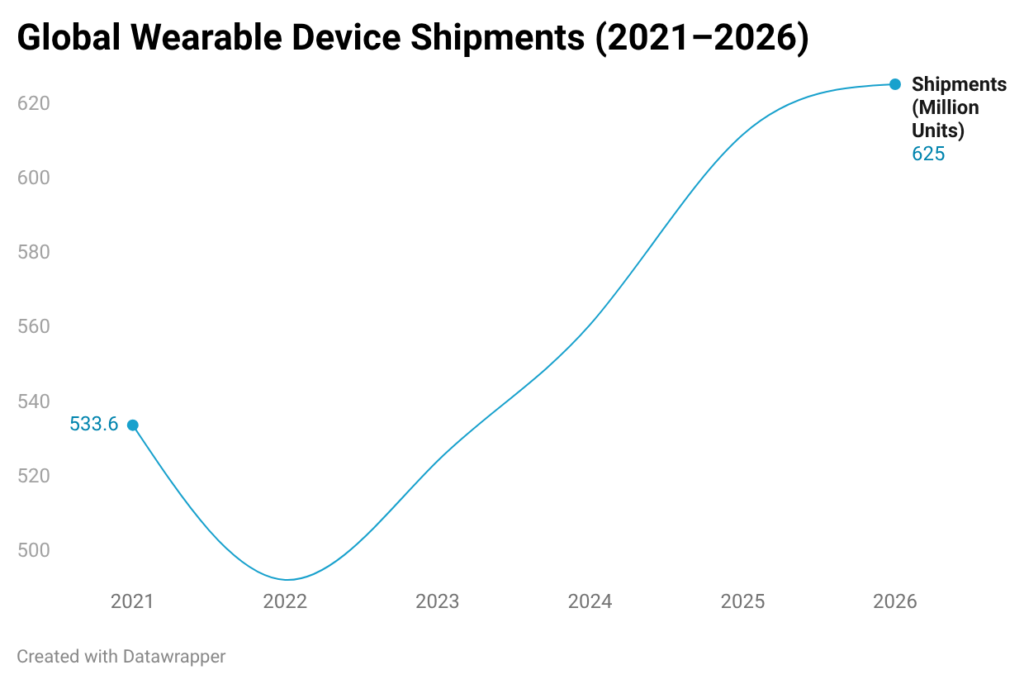
The shift is being driven by far more than technological curiosity. As artificial intelligence becomes increasingly integrated into everyday life, technology companies are competing to own the next computing interface. The prize is enormous. The company that succeeds will not only sell hardware but also control how billions of people access AI, consume digital services and interact with the connected world. It is a strategic battle for the next platform economy.
Each wearable represents a different vision of that future. Smartwatches have emerged as the most versatile category, bringing communication, payments and health monitoring to the wrist. Fitness bands continue to appeal through affordability and simplicity, while Smart rings demonstrate that powerful technology can be almost invisible, quietly collecting health insights without demanding attention.
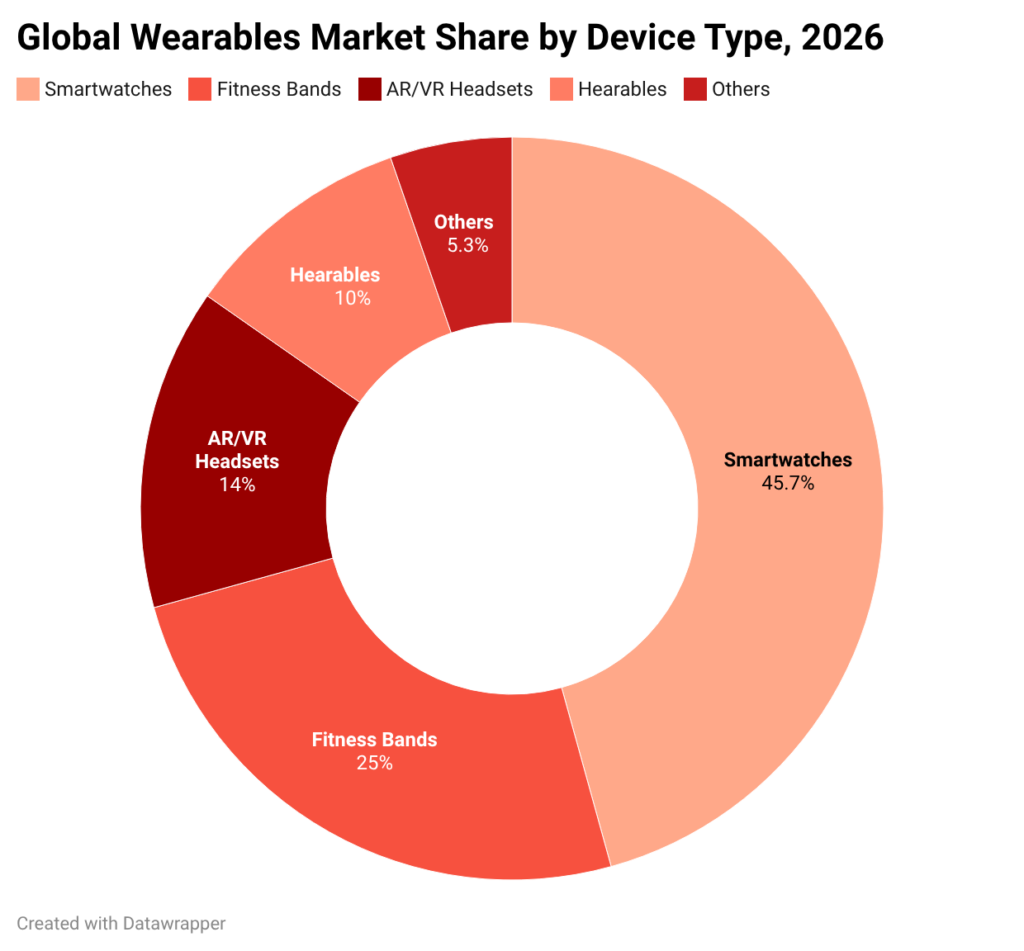
The boldest bet, however, is on Smart glasses. By combining cameras, microphones, speakers and AI into everyday eyewear, they promise a world where navigation, translation and contextual assistance happen naturally, without repeatedly reaching for a screen. That vision is already gaining commercial momentum. Meta’s Ray-Ban smart glasses reportedly account for more than three-quarters of global smart-glasses shipments, helped by the company’s partnership with Ray-Ban and its focus on familiar consumer design, signalling that consumers may finally be ready for AI beyond the smartphone. Yet their biggest challenge is not technology but trust. Privacy concerns, regulatory scrutiny and social acceptance could prove just as important as processing power or battery life.
AI pendants are taking an even more radical approach. Instead of replacing the smartphone with another screen, they attempt to make the screen disappear altogether, relying entirely on voice and contextual intelligence. But history has shown that consumers rarely embrace new interfaces before the underlying technology is ready, as products such as Humane’s AI Pin and Rabbit R1 discovered.
Meta may be leading today’s race, but it is far from alone. Apple, Google, Samsung and OpenAI are all pursuing their own vision of AI-powered hardware, each hoping to define how people interact with technology over the next decade.
Just as smartphones became the gateway to the internet, the winning wearable could become the gateway to artificial intelligence. The company that defines that interface will not simply launch another successful device—it could shape the next chapter of the digital economy.
Be the first to comment