
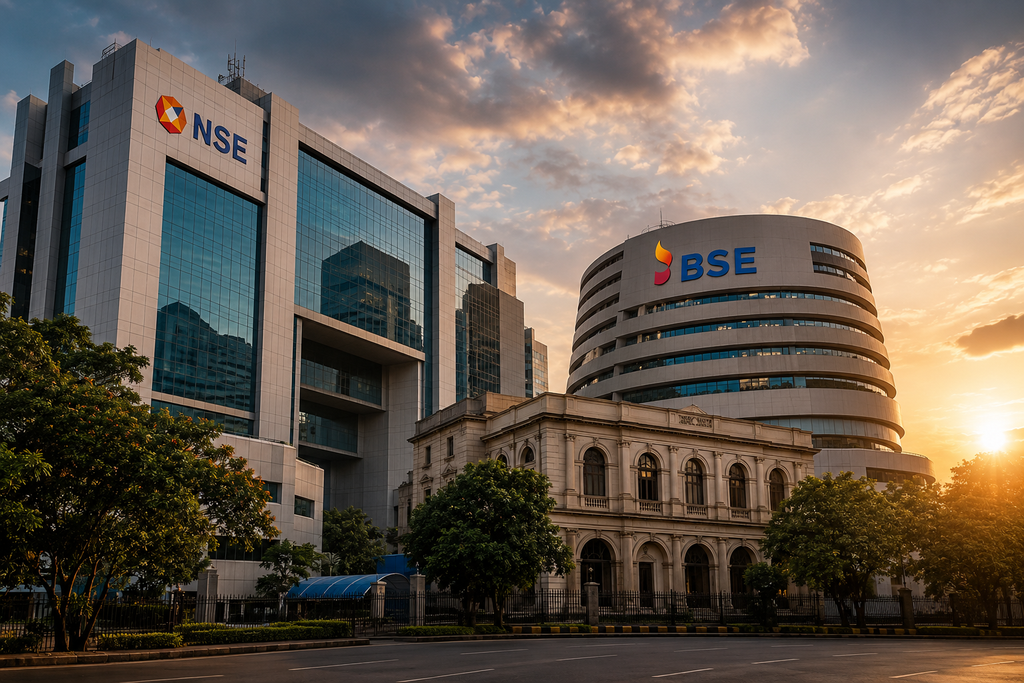
India’s stock market infrastructure is a textbook case. The National Stock Exchange (NSE) and Bombay Stock Exchange (BSE) together control virtually 100% of equity trading. NSE alone commands roughly 90–93% of cash market turnover and an even higher share of equity futures, with BSE trailing far behind in most segments until recent shifts in derivatives. This is not healthy competition. It is concentrated power over critical market plumbing.
Liquidity begets liquidity, so exchanges tend toward natural monopoly. That does not make the outcome benign. A single dominant platform creates single points of failure, weakens incentives for continuous innovation, and raises the cost of systemic risk. India has already lived through the consequences.
The 2021 NSE outage halted trading for hours after failures in telecom and storage systems hit risk-management and clearing infrastructure. Co-location and dark-fibre controversies exposed preferential access that undermined fair play. Governance lapses, settlements running into hundreds of crores, concentration of revenue among a handful of large brokers, and repeated technical or cyber incidents have all surfaced in recent years. When one institution processes the overwhelming majority of orders, any disruption or integrity failure ripples across the entire market and the savings of millions of investors.
Reviving the Kolkata Stock Exchange (KSE, formerly CSE) and strengthening the Metropolitan Stock Exchange of India (MSEI) is therefore not nostalgia. It is risk mitigation and regional development. KSE has been dormant since trading was suspended in 2013 for regulatory non-compliance. The West Bengal government has now publicly backed its revival, arguing that a functioning eastern bourse would improve capital access for regional enterprises, lower listing and trading costs, and generate employment while restoring Kolkata’s historic role as a financial centre. MSEI, already recognized and seeing gradual volume growth with broker and institutional backing, offers another alternative venue.
Critics claim the idea’s time has passed: order flow will always migrate to the deepest pool, regional exchanges withered long ago, and capital is better spent elsewhere. That view underweights resilience. Multiple exchanges create competitive pressure on fees, technology, product design, and service quality. They provide redundancy if one platform faces an outage, cyber event, or governance crisis. They can specialise—SME listings, regional companies, or niche products—rather than trying to replicate NSE’s scale overnight. They also dilute the political and regulatory capture risk that can accompany any near-monopoly infrastructure institution.
India’s capital markets have grown spectacularly. That growth should not rest on a fragile duopoly that is effectively an NSE-heavy monopoly in volumes. Healthy competition among BSE, NSE, a revived KSE focused on eastern India, and MSEI would not fragment liquidity irreparably; properly designed connectivity, clearing linkages, and regulation can preserve national liquidity while spreading operational and institutional risk. Monopolies may be efficient until they fail. India’s experience shows the cost of that failure. Diversifying exchange infrastructure is simply prudent public policy.
Be the first to comment