
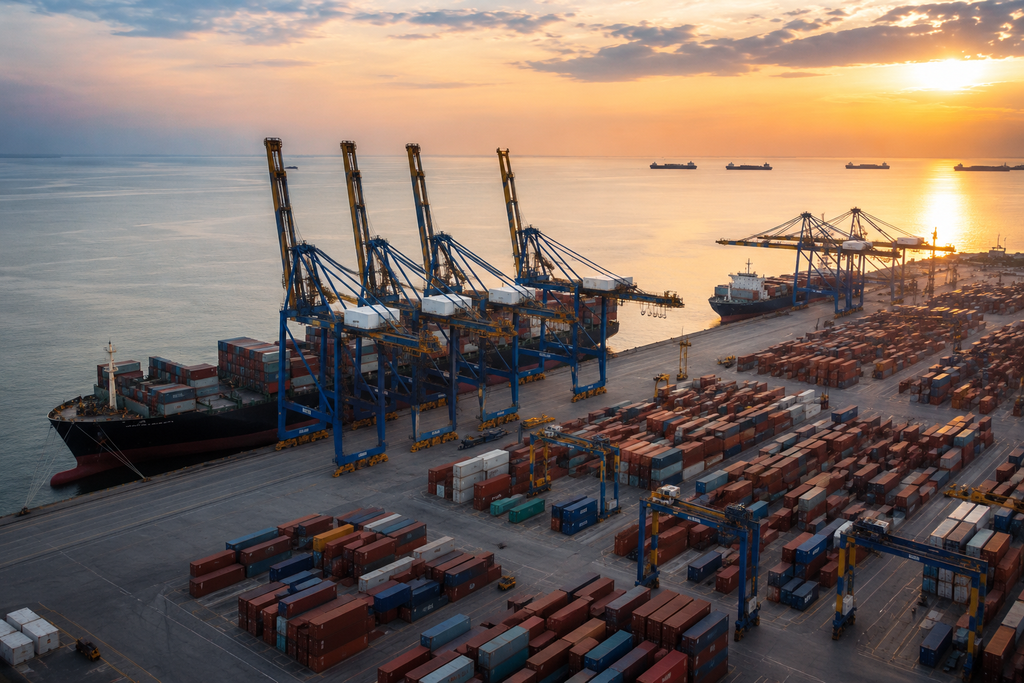
India has spent the past decade expanding its port capacity. The next challenge is making that capacity competitive. With a coastline of about 11,099 kms and access to major Indian Ocean trade routes, India has geography on its side. However, geography alone does not create a maritime advantage; infrastructure connecting Indian producers and consumers to global markets does. Factor this: Approximately 95% of India’s trade by volume and about 70% by value is moved through maritime transport, making ports central to the country’s external commerce.
Ports handle the energy and industrial inputs India imports and provide gateways for manufactured and agricultural exports. Their efficiency affects logistics costs, supply-chain reliability and, ultimately, the competitiveness of Indian businesses. As manufacturing expands and global companies diversify supply chains, reliable trade gateways are becoming increasingly important. Rising cargo volumes, larger container vessels and pressure for faster turnaround have made ports critical economic assets rather than simply supporting infrastructure. India’s ambition to become a global manufacturing and export hub therefore depends as much on moving goods efficiently as on producing them efficiently. The question is no longer simply whether India has enough ports. It is whether its ports can handle the scale, vessel sizes and logistics demands of the next phase of trade growth.
Be the first to comment