
India’s electric vehicle (EV) industry is undergoing a major structural transformation driven by economic, regulatory, environmental, and technological factors. Sustained petrol prices in the range of ₹105–₹115 per litre across major cities have significantly improved the cost competitiveness of electric mobility, particularly in the electric two-wheeler (e-2W) segment. This shift is reinforced by policy support such as FAME-II, the Production Linked Incentive (PLI) scheme, reduced GST on EVs, and state-level subsidies, all of which have accelerated adoption.
The e-2W segment has emerged as India’s fastest-growing EV category, with players such as Ather Energy, Ola Electric, TVS Motor, Bajaj Auto, and Hero MotoCorp competing through distinct strategic models.
Ola Electric gained an early lead through a scale-driven, low-ASP strategy focused on mass-market penetration, capturing an estimated 30–35% market share during 2022–2025. However, aggressive pricing, quality issues, weak after-sales service, and compliance concerns have created significant margin pressure.
TVS Motor leveraged its legacy ICE business and extensive dealership network to position the iQube as a reliable urban mobility solution. Backed by brand trust and distribution strength, TVS remains one of the strongest players in the segment.
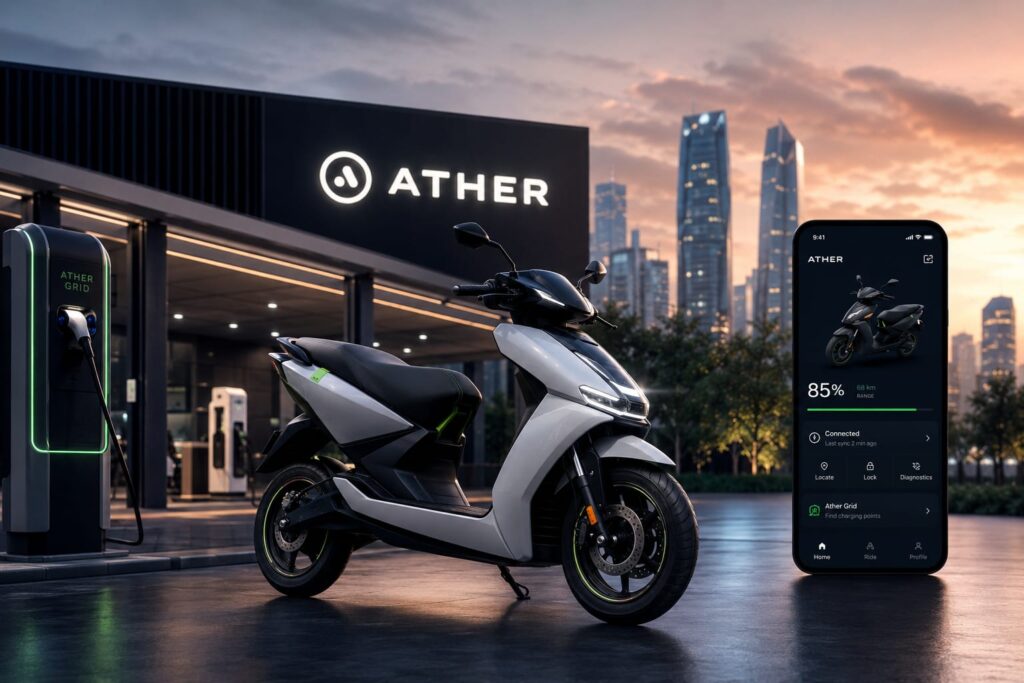
In contrast, Ather Energy operates in the premium EV ecosystem, differentiated by software-led products, higher ASPs, and integrated charging infrastructure.
Be the first to comment