
Author: Benjamin Graham
Genre: Finance / Value Investing
Few investment books have enjoyed the longevity and influence of The Intelligent Investor. First published in 1949, Benjamin Graham’s classic remains the cornerstone of value investing and continues to shape the philosophies of investors such as Warren Buffett. Written for investors willing to look beyond short-term market fluctuations, the book is less a guide to selecting winning stocks than a framework for developing sound judgement, emotional discipline and a long-term approach to wealth creation.
Rather than following a step-by-step investment formula, Graham gradually builds his philosophy through discussions on investor temperament, market behaviour, portfolio construction and security analysis. Early chapters distinguish investing from speculation, warning readers against treating the stock market as a vehicle for quick profits. As the book progresses, Graham introduces concepts that have since become foundational to modern investing, including intrinsic value, the Margin of Safety, and his celebrated metaphor of Mr. Market an emotional business partner whose irrational optimism and pessimism create opportunities for patient investors rather than signals to follow blindly. He also distinguishes between defensive and enterprising investors, recognising that investment strategies should reflect an individual’s temperament, knowledge and willingness to commit time to research.
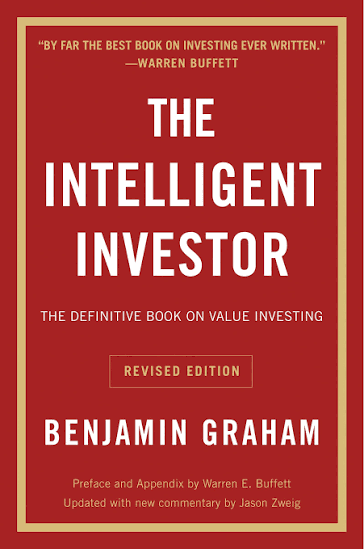
What elevates the book beyond a traditional finance manual is its emphasis on psychology. Graham argues that investment success depends less on superior intelligence than on emotional restraint, an idea captured in his enduring observation that “the investor’s chief problem and even his worst enemy is likely to be himself.” This focus on behaviour rather than prediction explains why the book continues to resonate despite dramatic changes in financial markets.
The reading experience, however, reflects its era. Graham’s prose is methodical, technical and occasionally repetitive, with lengthy discussions of bond markets, balance-sheet analysis and companies that no longer exist. Readers expecting a fast-paced or conversational style may find portions demanding. Yet this deliberate pace mirrors the author’s philosophy: investing rewards patience more than excitement.
The book’s limitations extend beyond its age. Graham’s quantitative screening methods particularly his preference for low price-to-earnings and price-to-book ratios have become increasingly difficult to implement in markets dominated by asset-light technology companies and intangible assets. Even Warren Buffett, Graham’s most celebrated student, gradually evolved beyond these rigid screening rules by placing greater emphasis on business quality and durable competitive advantages.
Likewise, while algorithmic trading and instant information have reduced obvious pricing anomalies, Graham’s broader principles of valuing businesses independently of market sentiment remain remarkably resilient.
For modern readers, the revised edition featuring Jason Zweig’s commentary significantly enhances the experience. Zweig supplements each chapter with contemporary examples, behavioural insights and references to events such as the dot-com bubble and the global financial crisis, demonstrating how Graham’s principles continue to apply in markets very different from those of the 1940s and 1950s.
Ultimately, The Intelligent Investor is not the easiest introduction to investing, nor is it a practical handbook for today’s stock selection. Instead, it is best viewed as a philosophy of investing one that teaches readers to think independently, manage risk, question market consensus and remain emotionally disciplined. For patient, long-term investors willing to engage with its demanding prose, Graham’s timeless lessons continue to offer enduring value.
Be the first to comment