
Critical fuel such as diesel / petrol prices have escalated in past 6 months
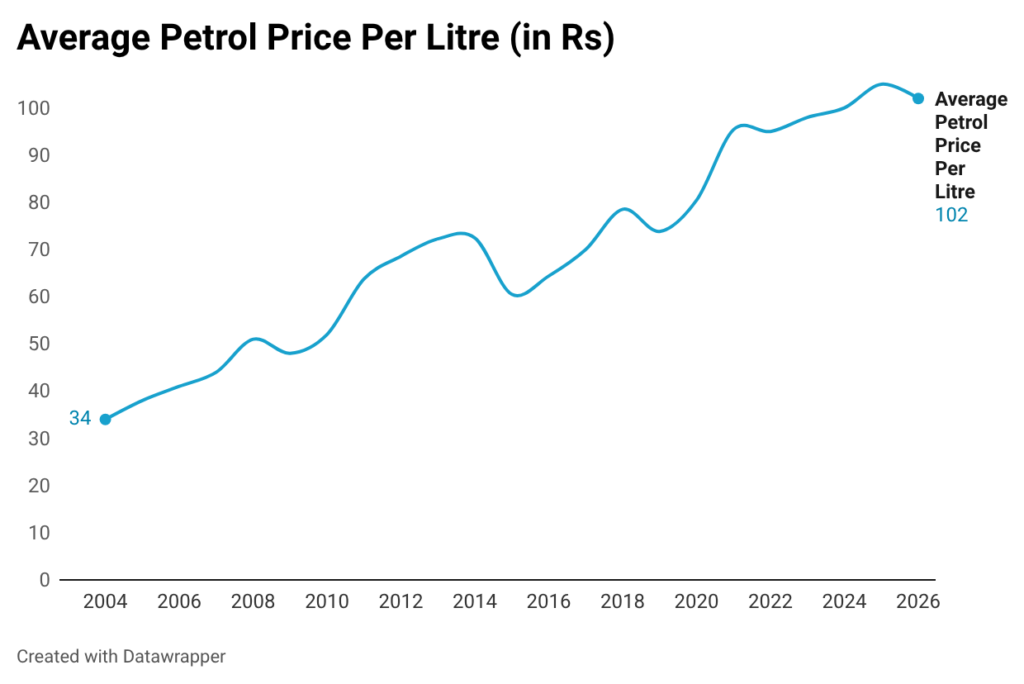
The journey of petrol prices in India over the past two decades reflects far more than fluctuations at fuel stations it tells the story of an economy growing alongside rising energy dependence. From an average price of nearly ₹34 per litre in 2004, petrol has steadily climbed to around ₹102 today, driven by higher crude oil prices, currency movements, refining costs and changes in taxation. While the increase has not been linear, every major global event from the commodity supercycle and the 2008 financial crisis to the post-pandemic recovery and geopolitical conflicts has left its imprint on domestic fuel prices. Despite periods of temporary relief, the long-term direction has remained unmistakably upward. Higher petrol prices have influenced transportation costs, logistics expenses and inflation across the economy, affecting businesses and consumers alike. At the same time, they have accelerated conversations around fuel efficiency, electric vehicles and alternative energy sources. As India continues expanding its economy and vehicle ownership rises, balancing energy affordability with fiscal stability will remain one of the country’s most important policy challenges.

Be the first to comment