
Global Gold Reserves: Why the Yellow Metal Still Rules the World
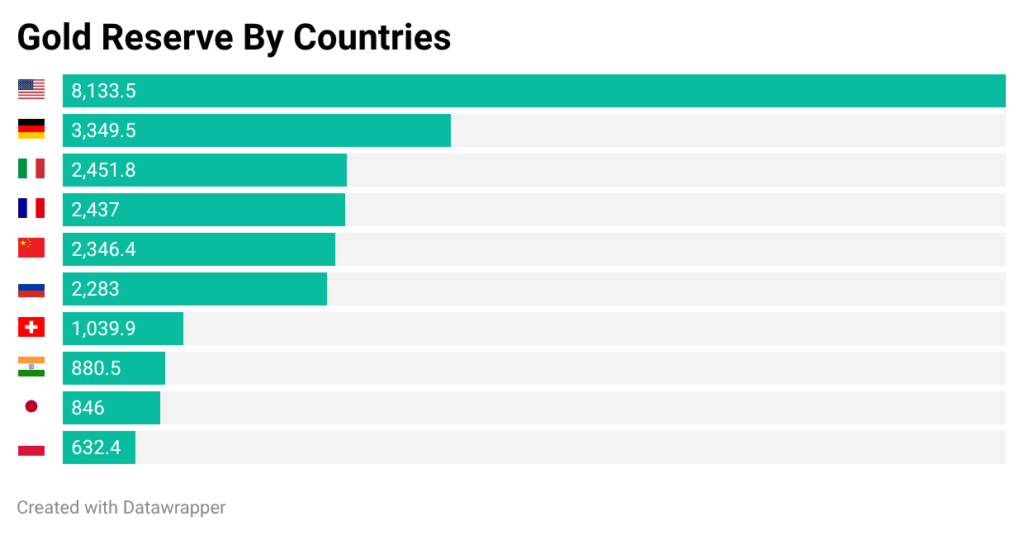
For decades, many believed that gold would gradually lose its importance as financial markets evolved and digital assets gained popularity. Yet central banks continue to tell a very different story. Even in an era dominated by electronic payments, sovereign bonds, and reserve currencies, gold remains one of the world’s most trusted financial assets. The United States still sits comfortably at the top with more than 8,100 tonnes of official reserves more than double Germany’s holdings and several times larger than most other nations. European economies such as Italy and France continue to safeguard large stockpiles accumulated over generations, while China and Russia have steadily expanded their reserves as part of broader efforts to diversify away from the US dollar. India, too, has quietly strengthened its position, now ranking among the world’s largest official gold holders with nearly 881 tonnes. The renewed interest in gold reflects more than just tradition; it reflects growing geopolitical uncertainty, inflation concerns, and the need for financial resilience. As global tensions persist and central banks seek stability in an increasingly uncertain world, gold continues proving that despite being one of humanity’s oldest stores of value, it remains one of the most relevant.
Be the first to comment