
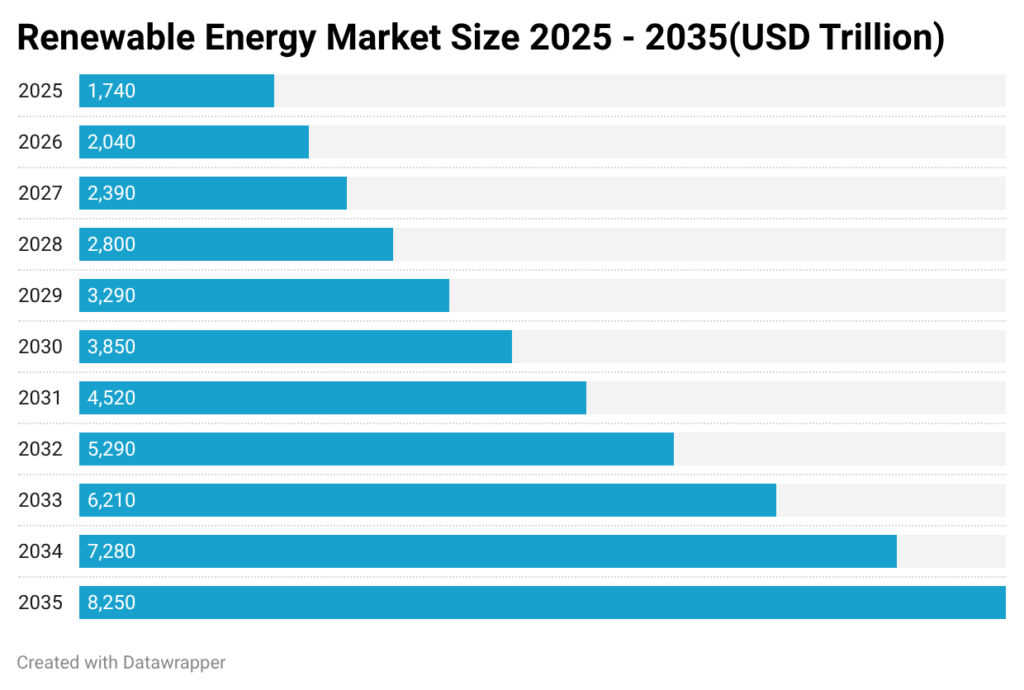
The renewable energy (RE) industry has evolved from a policy-supported alternative power source into one of the largest and fastest-growing sectors of the global economy. Today, renewable energy is not only an environmental imperative but also a strategic driver of economic growth, industrial competitiveness, energy security, and infrastructure investment. The global renewable energy market was valued at approximately US$1.6 trillion in 2024 and is projected to exceed US$4.8 trillion by 2033, reflecting the accelerating transition toward low-carbon energy systems across developed and emerging economies.
The scale of expansion has been unprecedented. Global renewable energy capacity reached a record 4,448 GW in 2024 following the addition of 585 GW of new capacity during the year, accounting for over 92% of total global power capacity additions. Solar energy alone contributed approximately 452 GW of new installations, representing more than three-fourths of total renewable additions, while global wind capacity surpassed 1,100 GW. Together, solar and wind have become the dominant technologies shaping the future of electricity generation, supported by declining costs, technological advancements, and increasing investor confidence.
Renewables are also attracting a growing share of global capital expenditure. According to industry estimates, annual investments in clean energy technologies now exceed investments in fossil-fuel-based power generation. Alongside solar and wind, emerging segments such as battery storage, green hydrogen, electric mobility, and smart-grid infrastructure are creating new opportunities across the energy value chain. As economies pursue net-zero commitments and energy independence, renewable energy has become one of the most attractive long-term infrastructure investment themes globally.
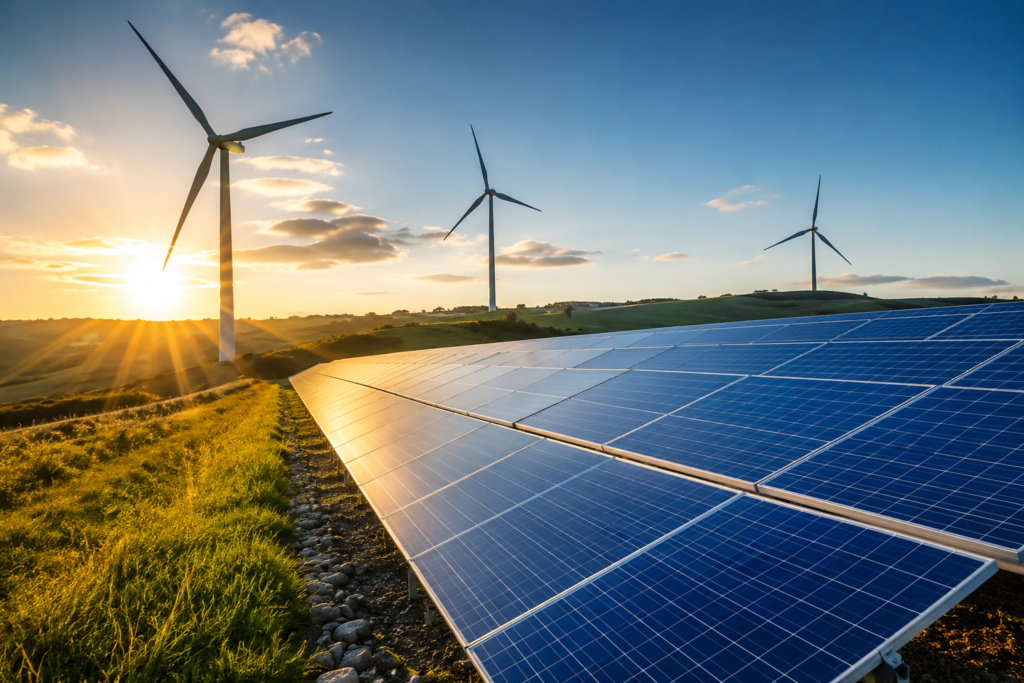
India is leading the RE installations and Solar is the driver
India has emerged as one of the most significant beneficiaries of this transition. The country is now the world’s third-largest renewable energy market by installed capacity and the third-largest solar power producer globally. As of December 2025, India’s renewable energy capacity stood at 250.52 GW, with non-fossil fuel sources accounting for more than 50% of total installed electricity capacity. Renewable electricity generation excluding large hydro projects reached 283.62 billion units between April 2025 and February 2026, reflecting a strong 22.85% year-on-year increase.
The investment opportunity is equally significant. In 2023 alone, the addition of 13.5 GW of renewable capacity attracted investments worth approximately ₹74,000 crore. Looking ahead, major Indian corporate groups have announced clean-energy investment commitments approaching US$800 billion across renewable power, battery manufacturing, green hydrogen, electric vehicles, semiconductors, and related infrastructure through 2034. As industrialization, urbanization, and electrification continue to accelerate, renewable energy is increasingly becoming a strategic economic sector capable of generating employment, attracting capital, reducing energy imports, and strengthening India’s long-term competitiveness.

Be the first to comment